
 EN
EN  VI
VI KENTORI contains the active ingredient Hypochlorous Acid (HOCl), the antibacterial mechanism of Hypochlorous Acid is:
Hypochlorous acid (HOCl) is a rapidly moving, chargeless substance capable of oxidizing bacteria within seconds. Since Hypochlorous Acid does not carry an electrical charge, it allows it to better penetrate the protective membranes of bacteria, and kill bacteria thanks to its strong oxidizing power.
HOCl contained in KENTORI has effects on microorganisms through oxidation (oxidation), hydrolysis and deamination reactions. The reaction mechanism of HOCl includes binding to proteins to form N-chloro compounds, binding to the SH (sulfhydryl) group of proteins, and oxidation of a-amino acids to nitrile (R-COL) and aldehydes (R-) FOR).
When penetrating the cell, HOCl first causes physical damage to the cell wall and membrane of microorganisms. Inside the cytoplasm, HOCl acts on mitochondria to destroy the cytochrome enzyme that catalyzes redox reactions, these enzymes play an important role in cellular respiration. As a result of cytochrome destruction, there is a decrease in the amount of glucose and ATP in the cytoplasm. In addition, HOCl also disrupts metabolism and protein synthesis. HOCl reaction inside stem cells ·OH (hydroxyl radical) is a strong oxidizing agent that changes purine and pyrimidine, causing damage to the genetic material (DNA) of microorganisms. In general, HOCl can kill harmful bacteria, viruses and fungi from deep within the cell within seconds.
| Normal cells |  |
| Viruses infect cells and transfer DNA | 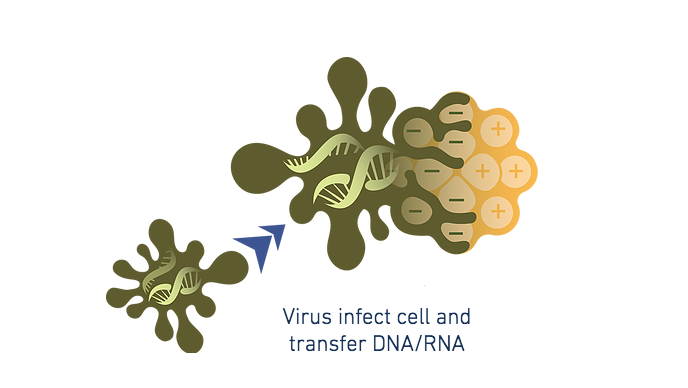 |
| Cells are infected and affect the body. | 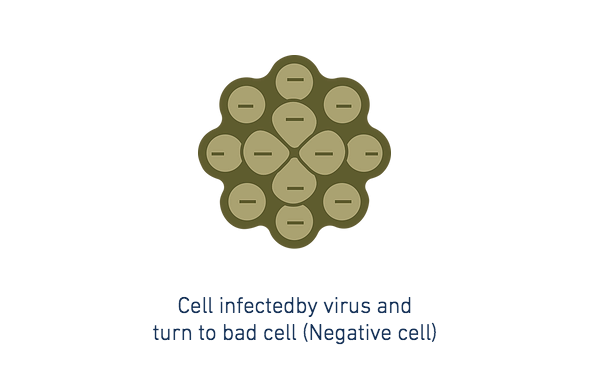 |
| Disease cell reproduction and viral outbreaks | 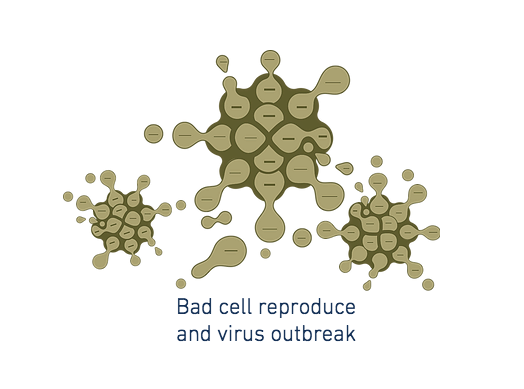 |
| Kentori works well, and kills all viral and Bacterial pathogens |  |
| The infected cell dies and the Virus cannot survive without a host. | 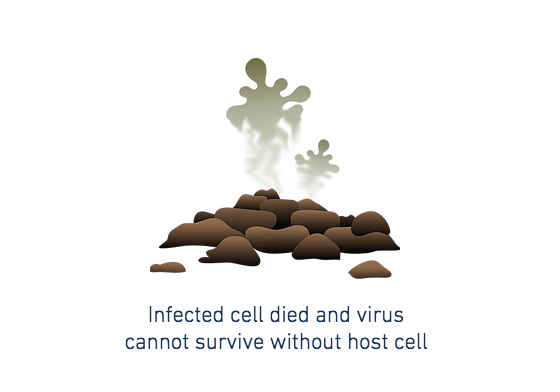 |